A roadside-assistance platform that insurers offer their policyholders: the driver asks for help from her phone and an agent at the insurer coordinates it from a console. Both sides of one case, designed for a moment of peak stress.
alligo
Role
Product Builder · strategy, UX/UI, brand, design system and the build
The challenge was to design both sides of a single case for a moment of peak stress. Three people need different things from it.
InsurerB2B client
Resolve cases fast, with traceability and fewer calls.
DriverEnd user
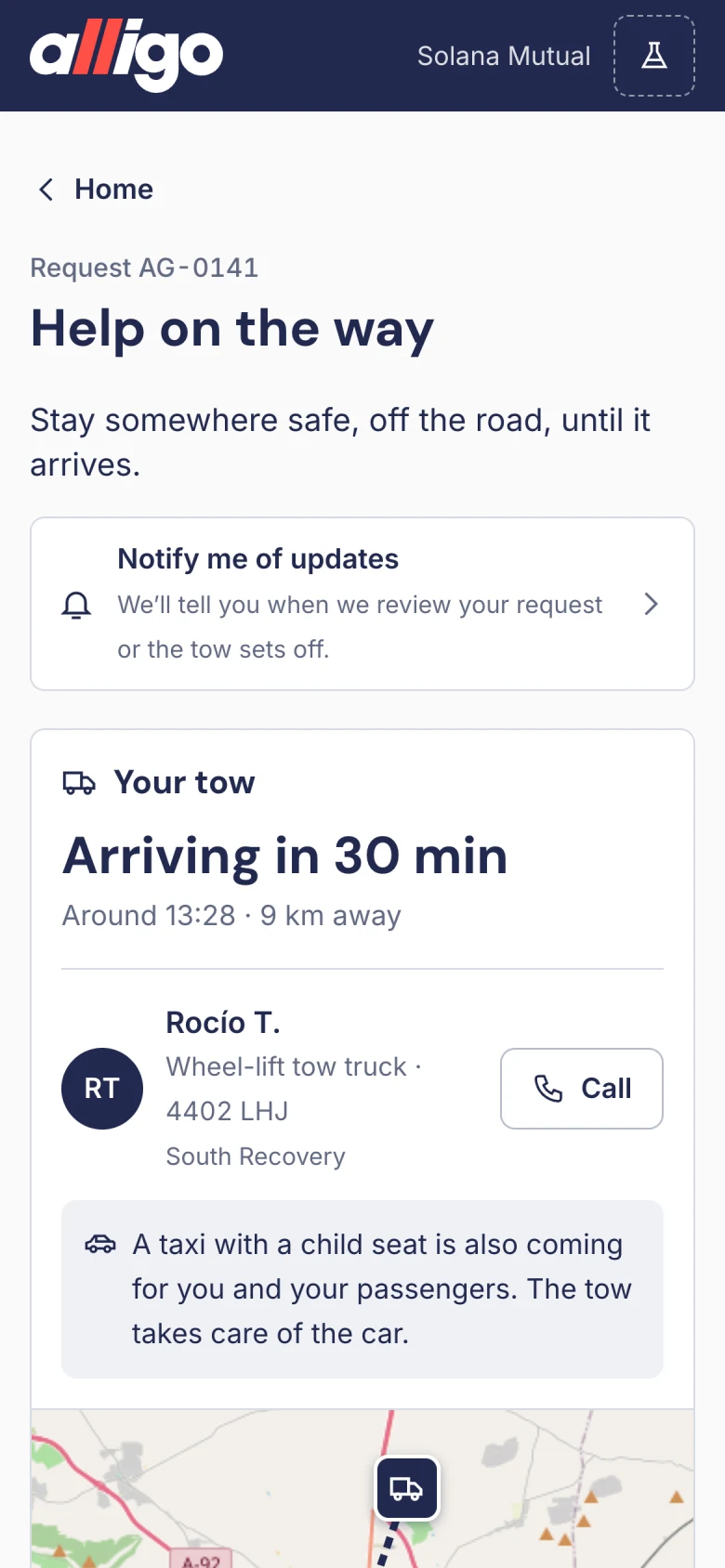
Know help is coming and when, without much reading.
AgentAt the insurer
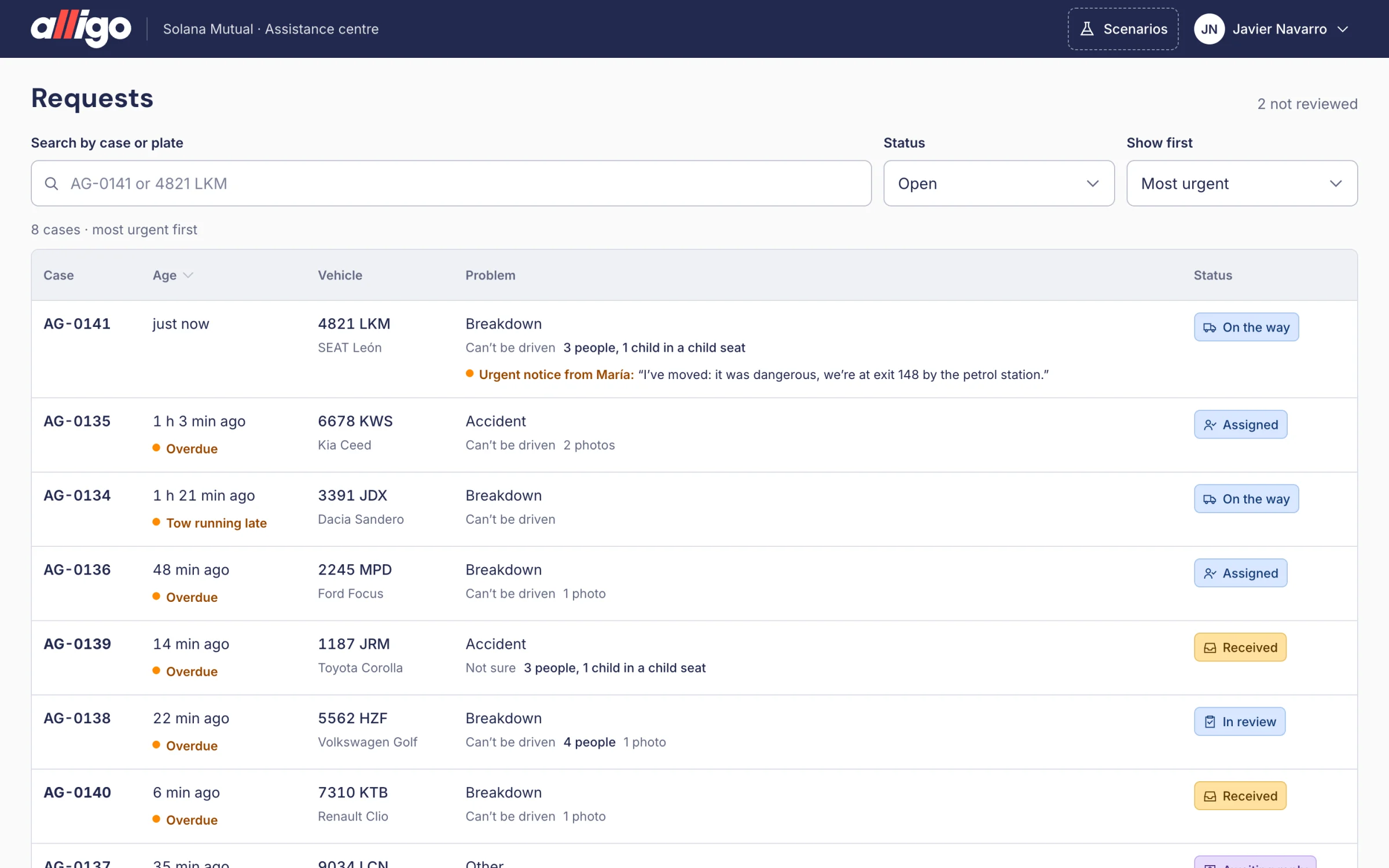
Know what to handle first, and decide without calling.
How it’s built
A working product, not a mock-up.
The full journey works across two tabs: a pure, tested domain (state machine, deadlines, notices, urgency), a data layer that handles latency, failures and duplicate sends, and real services: browser GPS, OpenStreetMap addresses, Leaflet maps, notifications and an installable app.
Unit tests
29
End-to-end journey tests
21
Design decisions documented
40+
Two products, one case
Same case. Two sides.
A first approach with a role switcher felt artificial; two products, each with its own entry point, look like what would really exist. A single state machine decides which change is valid and who can make it.
alligo · case lifecycle
One case, two sides.
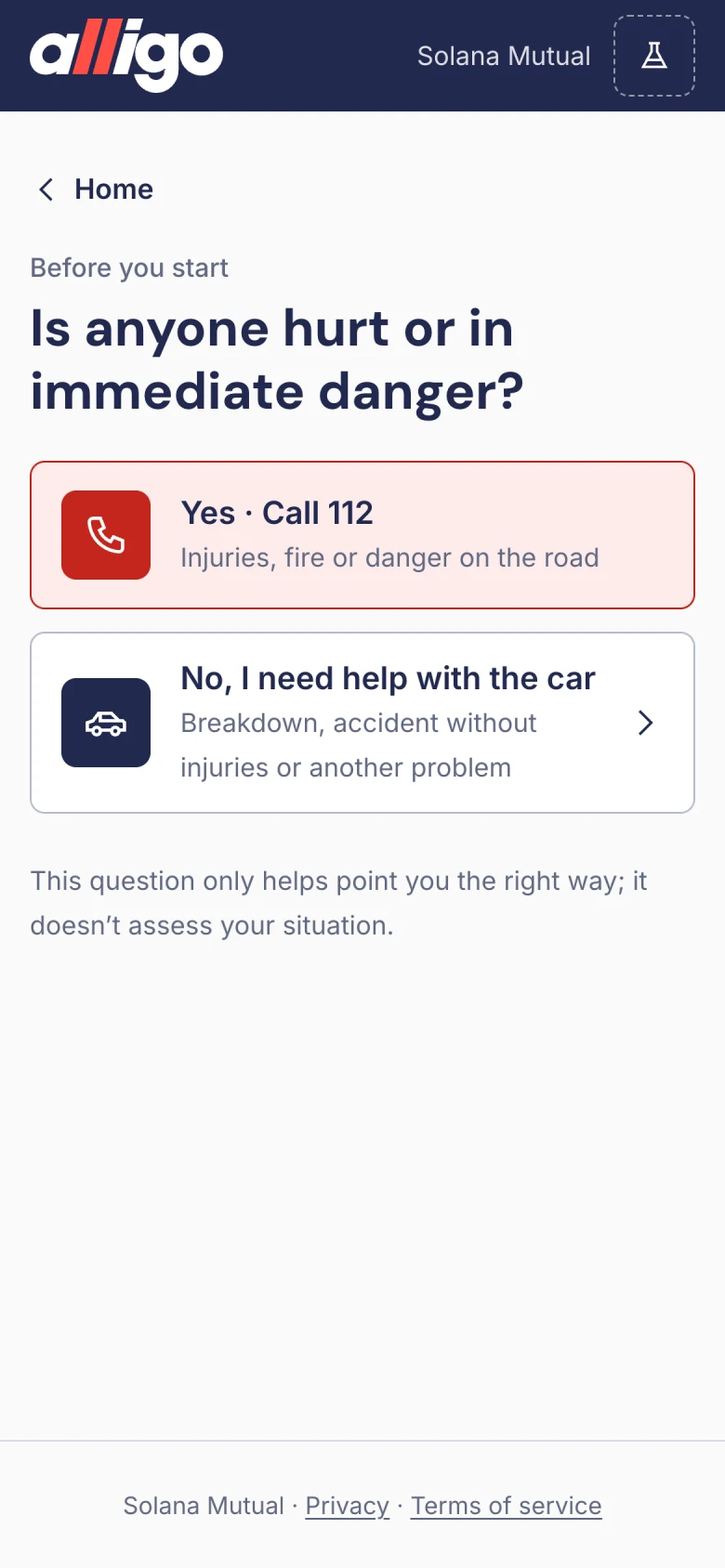
DriverAnyone hurt or in danger?
Yes Call 112 · one tap
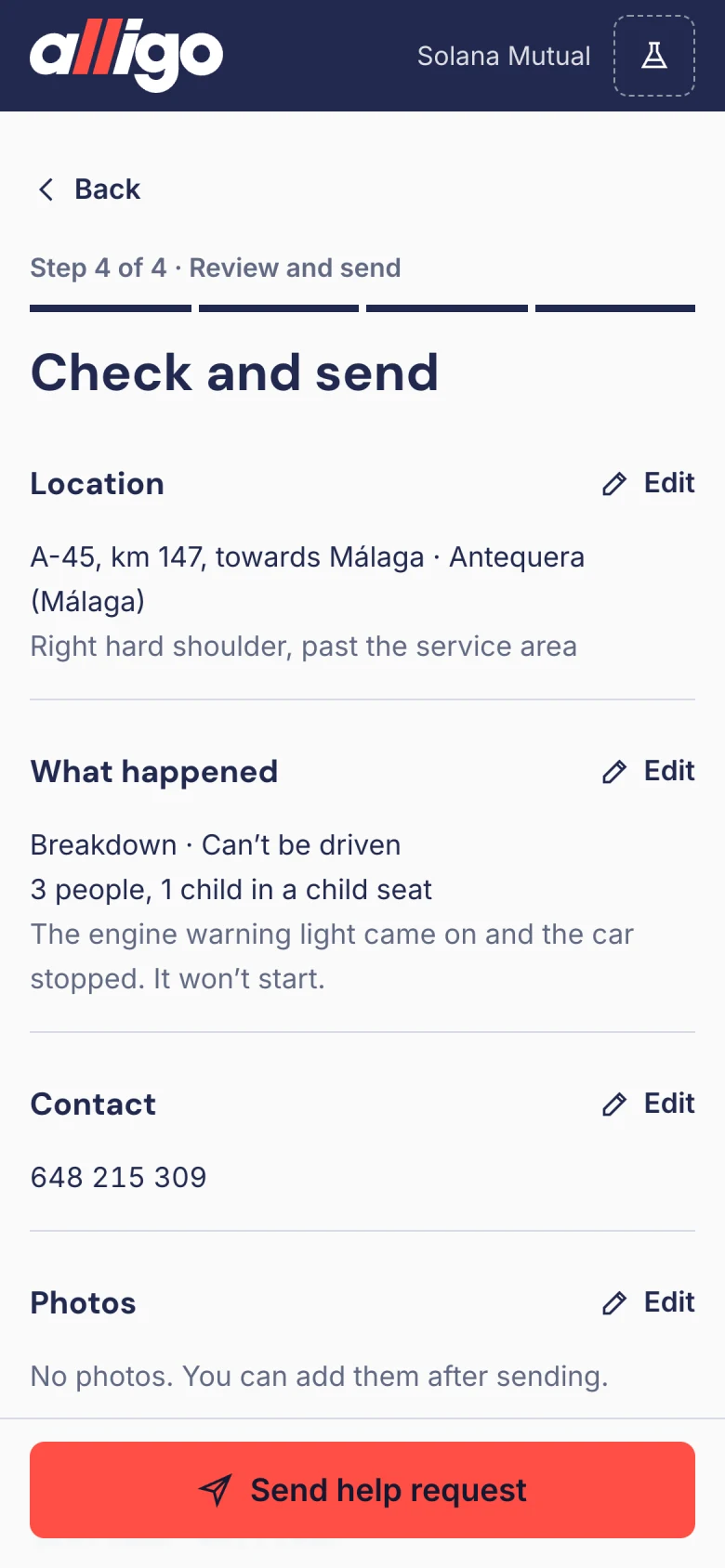
No 4-step request: GPS location, what happened, 2 photos
Send queued with no signal
Received
AgentStarts the reviewwithin 5 min
Reviewing
AgentAsks for one detail
Waiting for an answer
DriverAnswers, and it returns to Reviewing
ExceptionNo provider yetDriver sees “Still looking for a tow”; assign as soon as one is found.
AgentAssigns a providerwithin 15 min
Assigned
AgentMarks it on the waywithin 10 min
En route
ExceptionTow running lateDriver sees “Running late”; the agent sends the new time.
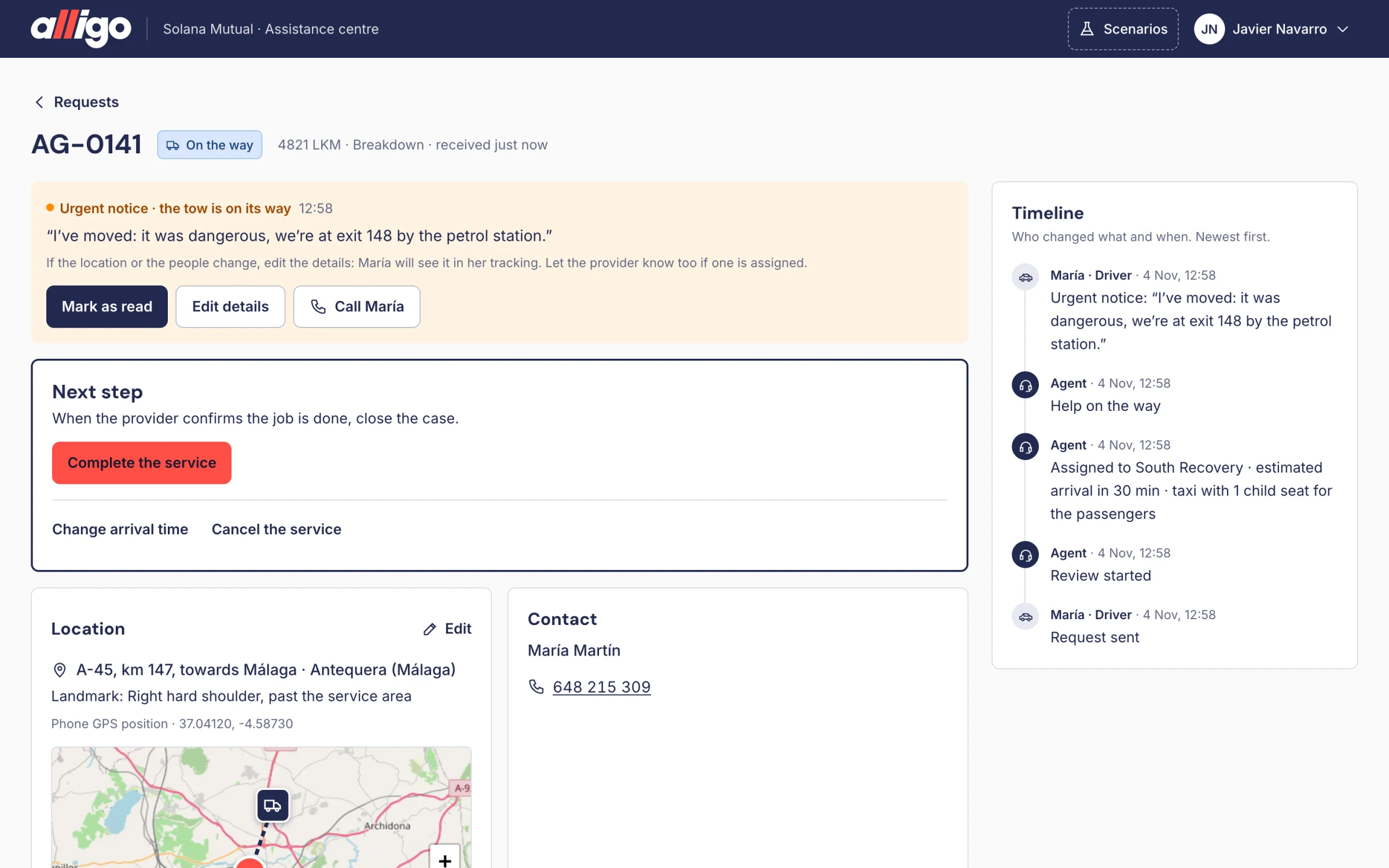
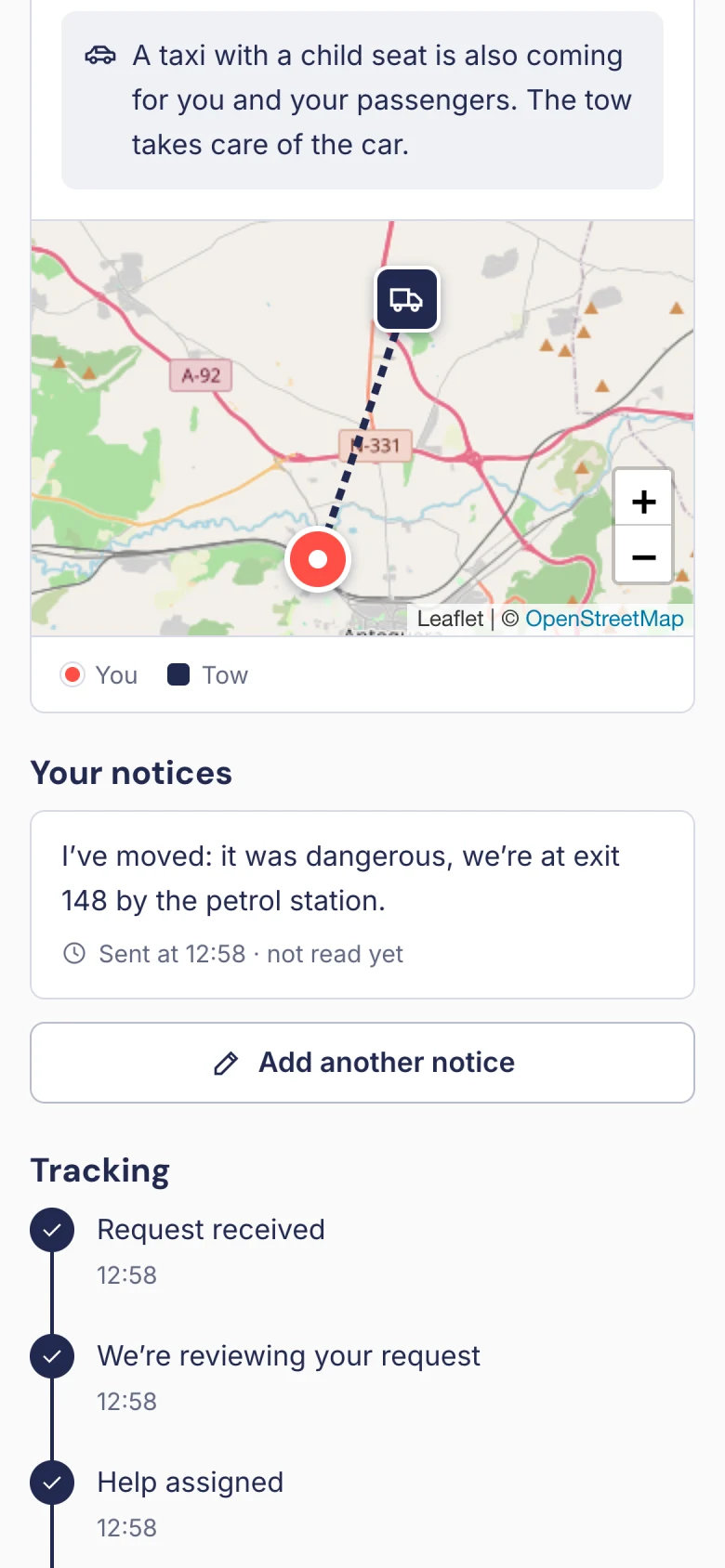
NoticeA notice, never an editUrgent while the tow is on its way; the agent marks it as read, edits the details or calls.
Driver seesTracking: name, plate, map and countdown
AgentCompletes the service
Completed
DriverRates the helptwo questions
CancelledThe driver withdraws or the agent cancels, from any open status.
Past a deadline, “Overdue” shows on both sides. The inbox puts unread urgent notices first, then what depends on the agent, then what waits on the driver. An expired policy warns, but never blocks a request for help.
One case, two sides: the statuses, who moves them, and what happens when something goes wrong.
“What do I handle first, and can I decide without calling?”
Device
Desktop and mobile
Sign-in
Work account
Key design decisions
Less reading, fewer calls.
alligo
alligo
Also: sending with no signal (the request queues and sends itself, without duplicates) · two suggested photos, none required · child seats asked only when children are ticked · a “Next step” block with only the valid actions · a two-question rating at the end.
Hypotheses and next steps
Built to be tested.
Several decisions rest on assumptions to validate with the insurer and users before scaling it: the tow cab’s passenger space, the review, assign and depart deadlines, and the child-seat rule for taxis. Next: test with 5 drivers in a simulated breakdown and 3 agents on “Most urgent”, and measure time to assignment, clarifications, notices per case and rating.
alligo is live, so you can try both sides yourself. I’d also be happy to walk you through the product decisions, the build with AI and the brand in an interview.

 Back to AI LabTry it live (opens in a new tab)